


 Cart
Cart
 sales@molnova.com



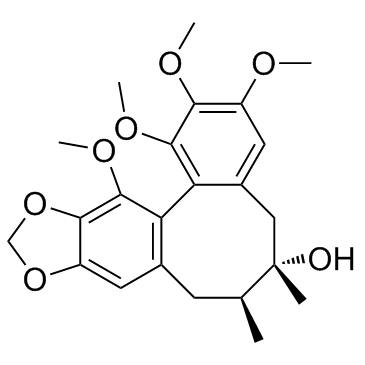
Gomisin A
CAS No. 58546-54-6
Gomisin A( Gomisin-A | TJN-101 | Wuweizi alcohol-B )
Catalog No. M18850 CAS No. 58546-54-6
Gomisin A may exert neuroprotective effects by attenuating the microglia-mediated neuroinflammatory response via inhibiting the TLR4-mediated NF-κB and MAPKs signaling pathways.
Purity : >98% (HPLC)
 COA
Datasheet
HNMR
HPLC
MSDS
Handing Instructions
COA
Datasheet
HNMR
HPLC
MSDS
Handing Instructions
| Size | Price / USD | Stock | Quantity |
| 5MG | 59 | In Stock |


|
| 10MG | 87 | In Stock |
|
| 25MG | 191 | In Stock |
|
| 50MG | 286 | In Stock |
|
| 100MG | 428 | In Stock |
|
| 500MG | 981 | In Stock |
|
| 1G | Get Quote | In Stock |
|
Biological Information
-
Product NameGomisin A
-
NoteResearch use only, not for human use.
-
Brief DescriptionGomisin A may exert neuroprotective effects by attenuating the microglia-mediated neuroinflammatory response via inhibiting the TLR4-mediated NF-κB and MAPKs signaling pathways.
-
DescriptionGomisin A may exert neuroprotective effects by attenuating the microglia-mediated neuroinflammatory response via inhibiting the TLR4-mediated NF-κB and MAPKs signaling pathways. Gomisin A has anti-inflammatory property, potentially result from the inhibition of COX-2, iNOS, IL-6, TNF-α and NO through the down-regulation of RIP2 and NF-κB activation. Gomisin A induces marked protective effects against hepatic and renal injury induced by CCl(4) exposure through differential regulation of the MAPK signal transduction pathway. Gomisin A significantly inhibits cell proliferation in a dose-dependent manner, due to cell cycle arrest in the G1 phase with the downregulation of cyclin D1 expression and Retinoblastoma (RB) phosphorylation. (In Vitro):Schisandrol B (Gomisin-A; 1-10 μM; 2 days) treatment decreases the aging related inflammatory molecules, such as, COX-2, IL1β, and TNF-α. Schisandrol B attenuates the activity of senescence-associated β-galactosidase.Schisandrol B (Gomisin-A; 1-10 μM; 2 days) inhibits reactive oxygen species production even in the stress-induced premature senescence (SIPS)-human diploid fibroblast (HDF) cells.Schisandrol B (Gomisin-A; 1-10 μM) inhibits the MAPK pathway and the translocation of NF-κB to the nucleus.Schisandrol B (Gomisin-A; 1-10 μM) promotes the autophagy and mitochondrial biogenesis factors through the translocation of Nrf-2, and inhibits aging progression in the SIPS-HDF cells.Schisandrol B (0-80?μM) dramatically alters APAP metabolic activation by inhibiting the activities of CYP2E1 and CYP3A11. (In Vivo):Schisandrol B (12.5?-200?mg/kg; oral administration; seven times with an interval of 12?hours) pretreatment significantly attenuates the increases in alanine aminotransferase and aspartate aminotransferase activity, and prevents elevated hepatic malondialdehyde formation and the depletion of GSH in a dose-dependent manner. Schisandrol B abrogates APAP-induced activation of p53 and p21, and increases expression of liver regeneration and antiapoptotic-related proteins such as cyclin D1 (CCND1), PCNA, and BCL-2.
-
In VitroSchisandrol B (Gomisin-A; 1-10 μM; 2 days) treatment decreases the aging related inflammatory molecules, such as, COX-2, IL1β, and TNF-α. Schisandrol B attenuates the activity of senescence-associated β-galactosidase.Schisandrol B (Gomisin-A; 1-10 μM; 2 days) inhibits reactive oxygen species production even in the stress-induced premature senescence (SIPS)-human diploid fibroblast (HDF) cells.Schisandrol B (Gomisin-A; 1-10 μM) inhibits the MAPK pathway and the translocation of NF-κB to the nucleus.Schisandrol B (Gomisin-A; 1-10 μM) promotes the autophagy and mitochondrial biogenesis factors through the translocation of Nrf-2, and inhibits aging progression in the SIPS-HDF cells.Schisandrol B (0-80?μM) dramatically alters APAP metabolic activation by inhibiting the activities of CYP2E1 and CYP3A11. Western Blot Analysis Cell Line:Human diploid fibroblast (HDF) cells Concentration:1 μM, 10 μM Incubation Time:3 days Result:Decreased the aging related inflammatory molecules, such as, COX-2, IL1β, and TNF-α.
-
In VivoSchisandrol B (12.5?-200?mg/kg; oral administration; seven times with an interval of 12?hours) pretreatment significantly attenuates the increases in alanine aminotransferase and aspartate aminotransferase activity, and prevents elevated hepatic malondialdehyde formation and the depletion of GSH in a dose-dependent manner. Schisandrol B abrogates APAP-induced activation of p53 and p21, and increases expression of liver regeneration and antiapoptotic-related proteins such as cyclin D1 (CCND1), PCNA, and BCL-2. Animal Model:Male C57BL/6 mice (6-8 weeks old, 20-22?g) injected with Acetaminophen (APAP) Dosage:12.5?mg/kg, 12.5?mg/kg and 200?mg/kg Administration:Oral administration; seven times with an interval of 12?hours Result:Showed a protective effect against APAP-induced liver injury in mice.
-
SynonymsGomisin-A | TJN-101 | Wuweizi alcohol-B
-
PathwayChromatin/Epigenetic
-
TargetCOX
-
RecptorOthers
-
Research AreaCancer
-
Indication——
Chemical Information
-
CAS Number58546-54-6
-
Formula Weight416.47
-
Molecular FormulaC23H28O7
-
Purity>98% (HPLC)
-
SolubilityDMSO : 50 mg/mL 120.06 mM;H2O : < 0.1 mg/mL
-
SMILESCC1CC2=CC3=C(C(=C2C4=C(C(=C(C=C4CC1(C)O)OC)OC)OC)OC)OCO3
-
Chemical Name——
Shipping & Storage Information
-
Storage(-20℃)
-
ShippingWith Ice Pack
-
Stability≥ 2 years
Reference
molnova catalog



related products
-
Piroxicam
Piroxicam is a non-selective COX inhibitor.
-
Licofelone
Licofelone is a dual COX/LOX inhibitor potentially for the treatment of osteoarthritis.?Licofelone is both an analgesic and an anti-inflammatory.
-
Ketoprofen
Ketoprofen is a non-selective NSAID with IC50 of 0.5 μM and 2.33 μM for human recombinant COX-1 and COX-2, respectively.
